
Four Ancient Metaphors for Living Well
How yin and yang, the pearl, the wheel, and the path remind us that difficulties create the future
The Wisdom Hidden in Metaphors
Some truths are difficult to explain directly. Across cultures, philosophers, mystics and storytellers have relied on metaphors because they communicate something that facts alone often cannot. A single image can sometimes express a lifetime of wisdom.
Four such metaphors have survived for centuries. Although they come from different traditions, they all point towards the same insight. Life is not about avoiding difficulty. It is about understanding its place in our development.
1. Yin and Yang: Every Light Contains a Seed of Darkness
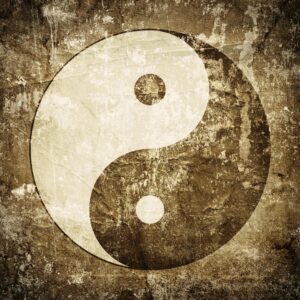
The familiar yin and yang symbol is one of the most recognised images in Chinese philosophy. At first glance it appears to represent opposites: light and dark, activity and rest, expansion and contraction.
Yet its deepest lesson lies in the small circles.
Within the white half is a black dot. Within the black half is a white dot.
This simple detail reminds us that no situation is entirely perfect, and no situation is entirely hopeless.
The happiest periods of life still contain uncertainty, disappointment or loss. Likewise, our darkest moments often reveal an unexpected opportunity, a lesson, a friendship, a new direction, or simply the strength we did not know we possessed.
The symbol is not suggesting that life is unfair. Rather, it reflects reality. Success carries responsibility. Failure carries learning. Joy can coexist with sadness, and challenge can become the beginning of something better.
Looking for absolute certainty or permanent perfection usually leads to frustration because life naturally contains both.
2. The Pearl: Beauty Begins with Irritation
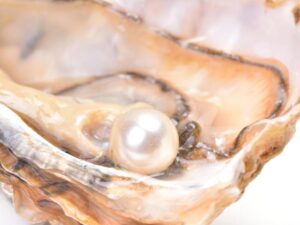
The pearl offers another profound lesson.
A pearl begins with an irritant.
A tiny grain of grit enters the oyster. Rather than rejecting it, resisting it, the oyster gradually surrounds it with layer upon layer of nacre until something precious is created.
Without the grit, there would be no pearl.
Nature itself seems to remind us that growth often begins with discomfort.
This does not mean we should seek suffering or romanticise hardship. It simply recognises that many of the qualities we admire most, resilience, compassion, patience and wisdom, rarely emerge during easy times. They develop because life occasionally presents challenges that require us to grow beyond who we were yesterday.
As philosopher and cultural theorist Claire Colebrook beautifully observes:
“A problem is a way of creating a future. When plants grow and evolve they do so by way of problems, developing features to avoid predators, to maximise light or to retain moisture.”
This simple observation transforms the way we think about adversity.
Problems are not merely interruptions to life. They are often the very conditions through which new possibilities emerge.
Plants evolve because they encounter problems.
Oysters produce pearls because of irritation.
Human beings likewise develop resilience, creativity and wisdom not despite difficulties, but often because of them.
What initially appears to be an unwelcome interruption may ultimately become the catalyst for a richer future.
3. The Wheel: Stay in the Centre
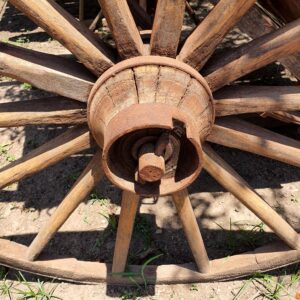
Imagine a wheel travelling along a rough road.
The outer rim constantly meets the ground. It experiences friction, movement, impact and wear. It is where the rubber meets the road.
The hub at the centre is different.
Although it moves with the wheel, it remains remarkably still. Everything turns around it.
This image appears repeatedly in contemplative traditions because it illustrates an important psychological insight.
Life never stops changing.
Relationships change.
Health changes.
Careers change.
Plans change.
Economies change.
If our sense of self lives entirely on the outer rim, every unexpected event throws us off balance.
But if we cultivate an inner centre, a place of stillness, awareness and perspective, external change becomes much easier to navigate.
Many wisdom traditions suggest that this centre is not something we fill, but something we empty.
In Zen, mu points towards openness beyond fixed concepts and habitual thinking. In Mahayana Buddhism, śūnyatā(emptiness) does not mean nothingness, but openness, interdependence and freedom from rigid attachment. In Hindu philosophy, the silent witness, sākṣin, is discovered not by accumulating more knowledge or experience, but by resting in pure awareness itself.
Taoism similarly celebrates the usefulness of empty space. The Tao Te Ching reminds us that a cup is useful because of its emptiness, and a room becomes habitable because of the empty space enclosed by its walls. Likewise, in Vastu Shastra, the Brahmasthan, the sacred central space of a building, is traditionally kept open and uncluttered. It represents the heart of the home, allowing the space element (ākāśa) and life energy to permeate the entire structure. Feng shui expresses a remarkably similar principle through the use of open courtyards and unobstructed central spaces, where energy (qi / prana) can gather, circulate and nourish the environment.
Throughout these traditions, emptiness is not absence or lack. It is potential. It is the fertile space from which creativity, clarity and wisdom emerge. Like the still hub of the wheel, it allows everything around it to move while remaining balanced at its centre.
This is closely related to the Taoist principle of wu wei, often translated as effortless action or non forcing. It does not advocate passivity, laziness or withdrawal. Rather, it describes acting in harmony with the natural flow of events instead of constantly forcing outcomes through struggle and excessive effort.
As the Tao Te Ching expresses it:
“The Master does nothing, yet leaves nothing undone.”
A modern saying inspired by Taoist wisdom expresses a similar idea:
“Doing nothing is better than being busy doing nothing.”
In today’s world, where busyness is often mistaken for productivity, this distinction is more relevant than ever. Constant activity can become a way of avoiding reflection, while moments of stillness often reveal the wisest course of action. Purposeful action does not always arise from doing more. Often, it emerges from pausing, observing and allowing clarity to develop before acting.
Some scholars have associated the Sanskrit word dukkha, usually translated as suffering, with the image of a wheel that does not run smoothly, a wheel that is off centre or just stuck. Whether understood literally or symbolically, the metaphor remains powerful. A wheel whose hub is misaligned cannot roll freely. Likewise, when we lose our inner centre, even ordinary challenges can become overwhelming.
A well centred wheel rolls more easily.
A well centred life often does too.
Perhaps the greatest paradox is that strength does not always come from adding more to ourselves. Sometimes it comes from letting go. The quieter the centre becomes, the more resilient we become to the movement at the edge of the wheel.
4. The Path Appears by Walking

Human nature seeks certainty.
We want clear maps before we begin a journey.
We want guarantees before making important decisions.
We would like to know that every new direction will eventually lead to success.
Life rarely offers that reassurance.
There is an old saying about searching for diamonds. We may throw away many ordinary stones in the hope that the next one will reveal something extraordinary. Yet there is never any guarantee that diamonds will appear. When we find diamonds, we usually throw away stones.
The uncertainty can feel uncomfortable.
Yet it is precisely within uncertainty that life unfolds.
Waiting until every doubt disappears often means never beginning.
Instead, life invites us to move forward with curiosity rather than certainty.
A saying widely attributed to Rumi captures this beautifully:
“As you start to walk on the way, the way appears.”
I have not been able to verify that these exact words appear in Rumi’s original writings, but the insight remains profound.
The future is seldom revealed all at once.
It unfolds one decision, one conversation and one step at a time.
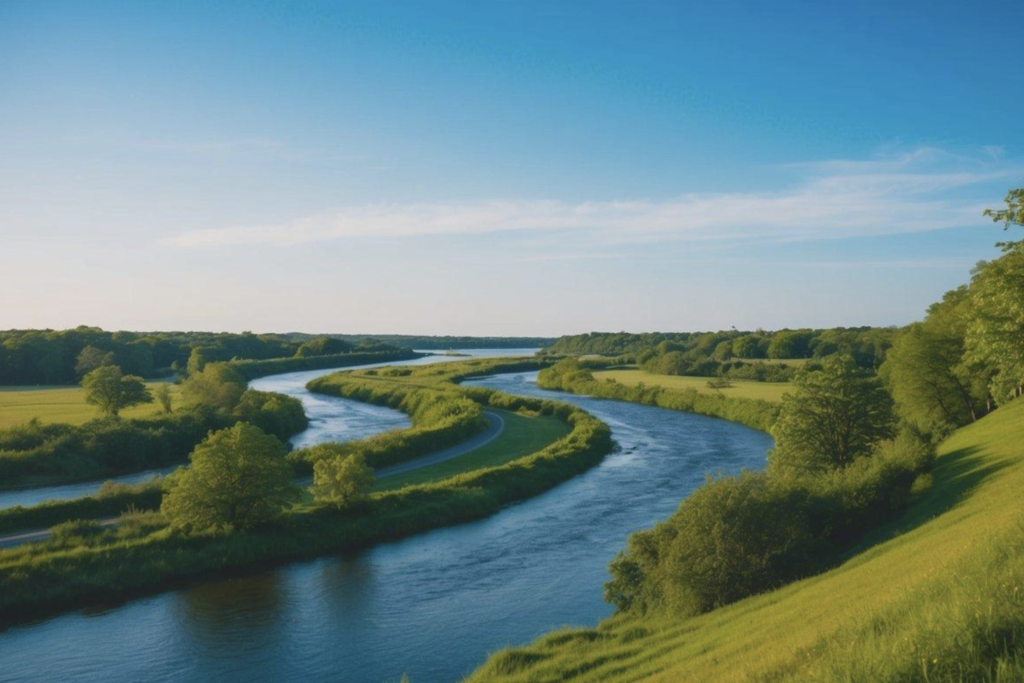
Perhaps this is why rivers meander rather than travel in straight lines. Their curves are not mistakes. They are simply the natural response to the landscape before them. Likewise, our own paths are shaped by the challenges we encounter, the choices we make and the people we become along the way.
We often imagine that we are searching for the right path.
Perhaps the deeper truth is that the path is gradually creating us.
Becoming Rather Than Arriving
Taken together, these four metaphors tell a remarkably consistent story.
Yin and yang reminds us that every joy contains a challenge, and every challenge contains possibility.
The pearl teaches that irritation can become something precious.
The wheel encourages us to remain centred while life continues to turn around us.
The path reminds us that certainty is not a prerequisite for progress.
Claire Colebrook adds one final insight. Problems do not merely interrupt the future. They help create it.
Perhaps, then, the real question is not:
“Why is this happening to me?”
Perhaps a more useful question is:
“Who is this experience helping me become?” and “What does it do?”
Life is less about finding certainty than about becoming the kind of person who can meet uncertainty with wisdom.
The ancient metaphors agree on one final lesson. We do not become wiser by escaping life’s difficulties, but by allowing them to shape us. Like the pearl, we are refined by friction. Like yin and yang, we learn to recognise possibility within challenge. Like the wheel, we discover stillness amidst constant movement. And like the river, we find that the path forward rarely unfolds in a straight line, but always rewards those willing to keep moving.
Perhaps that is the greatest treasure of all.
In short…
- Yin and yang teaches paradox.
- The pearl teaches transformation.
- The wheel teaches stillness.
- Emptiness teaches openness and potential.
- Wu wei teaches effortless action.
- The river naturally demonstrates wu wei by flowing around obstacles rather than fighting them.
Those six ideas together create a coherent philosophical thread rather than a collection of metaphors.
When stuck, unblock.
When tight, relax.
When weak, strengthen.
Yin becomes yang.
The grain becomes a pearl.
The turning wheel finds stillness.
The empty centre holds the world.
Wu wei moves without striving.
The river never conquers the mountain,
yet somehow reaches the sea.